Course in Canine Myofascial Kinetic Lines- for Veterinarians and canine physiotherapist’s – 3 days course the 22th to the 24th of October 2026

9,375.00 kr. 7,500.00 kr. without VAT

Course in Canine Myofascial Kinetic Lines – Anatomy, Function, Test and Treatment for Veterinarians, Canine Physiotherapists and other professionals with a similar anatomical background.

Teachers: Tove Due, DVM and Rikke Schultz, DVM.

Language: English

Price: 7.500 DK Kr + VAT 25% total 9.375 Dkkr also if you are from abroad as the course is held in DK

Place: Erstedvej 25, 9520 Skoerping, Norths of Jutland, not far from Aalborg Airport, Denmark

Program:
Thursday the 22th of October 2026 10.00 to 17.00: Theory.
Friday 23th of October 2026 9.00 til 16.00: Theory and practice
Saturday 24th of October 2026 9.00 til 15.00: Theory and practice

Included: Breakfast on Friday. Lunch, coffee, the and snacks all three days.
SKU: 3-2-1 Category:

Description

3 days course in Canine Myofascial Kinetic Lines, anatomy, function, test and treatment for veterinarians, canine physiotherapist’s and other professionals with a similar anatomical knowledge.

Teachers: Tove Due, DVM and Rikke Schultz, DVM.

PLEASE DO NOT WRITE YOUR VAT NUMBER IN THE VAT RUBRIC, BUT IN THE 2nd ADRESS LINE.

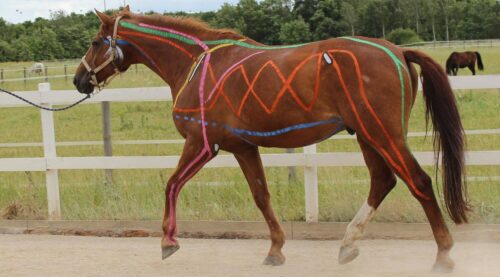
This three-day course offers an opportunity to learn how fascia influence the movement of the dog. You will get introduced to the newest fascia research and in this way, you can implement the Canine Myofascial Kinetic Lines into your daily work. We present the anatomy, their function, how to test them as well as different treatment options in theory and in practice.

Fare most motion pattern disturbances has involvement of fascia contractions and/or stiffness. With this tool you will be able to diagnose and treat tightness which troubles your lameness/back diagnostics and treatment efficiency. In many cases the disturbances can be resolved only by use of fascia releases.

The purpose of this course is also to bridge the gap between holistic diagnostics and treatment with conventional lameness examination. Knowledge of fascia is also important in rehabilitation.

Go to Top